"He has told you, O mortal, what is good; and what does the Lord require
of you but to do justice, to love kindness, and to walk humbly with your God?"
MICAH 6:8 NRSV
Home
Directions
Contact Us
About Our Church    Sermons    Mission and Outreach    Special Events    Weddings and Sacred Unions    Reflections    Announcements    Prayer For The Week   
You are viewing a single article.
Sunday, May 08, 2011
Bread Enough to Go Around
by Rev. Joyce Antila Phipps
Texts: Psalm 116; Luke 24: 13-35

In 1961, India was on the brink of famine. American plant agronomist Norman Borlaug had developed new forms of high yield crops to Mexico in the late 1940s under the auspices of the Rockefeller Foundation, doubling production; he was sent to India to apply his techniques and crops to stave off starvation. As a result of his work, wheat yields nearly doubled in the space of less than ten years. Called the Father of the Green Revolution, Borlaug was credited with saving over a billion lives and was awarded the Nobel Peace Prize in 1970. He saw his purpose in life as providing enough bread to go around to all.

The Green Revolution came at a price, of course, decreasing biodiversity and flooding fields with pesticides and now, with genetically modified crops pushed onto farmers by the likes of ADM and Monsanto. Borlaug, before he died in 2009 at the age of 85, criticized what he called the elitism of organic farming, which he saw as an assault on his life’s work to feed the world. As we consider on this Mother’s Day the impact of his work and of the work of people who are trying to change food policy, it’s important to remember that bread enough to go around is more than simply growing enough crops. The horrible famine in Ethiopia during the 1980s is but one of the more recent examples demonstrating that what is politely called “food insecurity” is the result of politics.

Food insecurity, hunger, and, yes, famine, have more to do with politics than the lack of food. Who can forget the image of an emaciated woman with no milk in her breast to feed her baby? We shudder and turn our concentration to other images. We cannot even remotely imagine our babies starving. We give to food banks as Congress argues that as a Nation we cannot afford to feed everyone. What Congress means, of course, is that the rich cannot afford to give up their luxuries so that the poor can eat. After all, the poor don’t give thousands of dollars to Congressional political campaigns.

How do we deal with the issue of persistent hunger? One potential Republican presidential candidate commented that the poor shouldn’t have so many children; of course, that same candidate opposes abortion and family planning. I guess he thinks the poor should just disappear. The poor we will always have, commented Jesus, not as a justification for stingy policies but as a commentary on the insatiable demands of the Must Have More" culture.

The Must Have More culture is not just limited to the page 2 jewelry ads or the luxury home pages of The New York Times; it encompasses all of us, including me. It’s really difficult for me to pass up a good book or a new seasoning. I have to admit there are mornings as I make my coffee and look at my spice rack and wonder if I really need or use all those seasonings. I have to admit that I have fewer qualms about my books justifying myself because I usually order from Amazon or go to a used book store.

In this morning’s reading, Jesus is known to his friends through the breaking of bread; in so many ways, we are also known to our friends through the breaking of bread. Eating together is probably the second most intimate shared act we engage in. This past week I read an old New York Times Magazine -- that’s right, I don’t put them in the recycling bin until after I’ve read them and the old ones are piled up. It was a letter to “The Ethicist” questioning the value of a class assignment in a social work program. The professor had students pretend to be homeless, go to welfare offices to apply for benefits, and a few other kinds of activities. One student asked if this was ethical, bristling that he would not “learn” anything valuable; the follow-up comment was that “learning” was more than simply seeing how others were treated. It was experiencing how the student himself was treated by others. Perhaps that was the point, commented the Ethicist.

I daresay that none of us in this room have ever been hungry -- really hungry and not just when we’re trying to lose weight. Our children haven’t cried for the lack of milk or food, partly because we have been taught how to make good choices, partly because we had certain advantages of race, class, education, work. Making sure there’s enough bread -- or veggies -- to go around is more than simply teaching good decision making to the poor. It is about changing our entire approach to poverty and hunger in America, not to mention the world. It is about making political choices on tax policy, education, and public benefits.

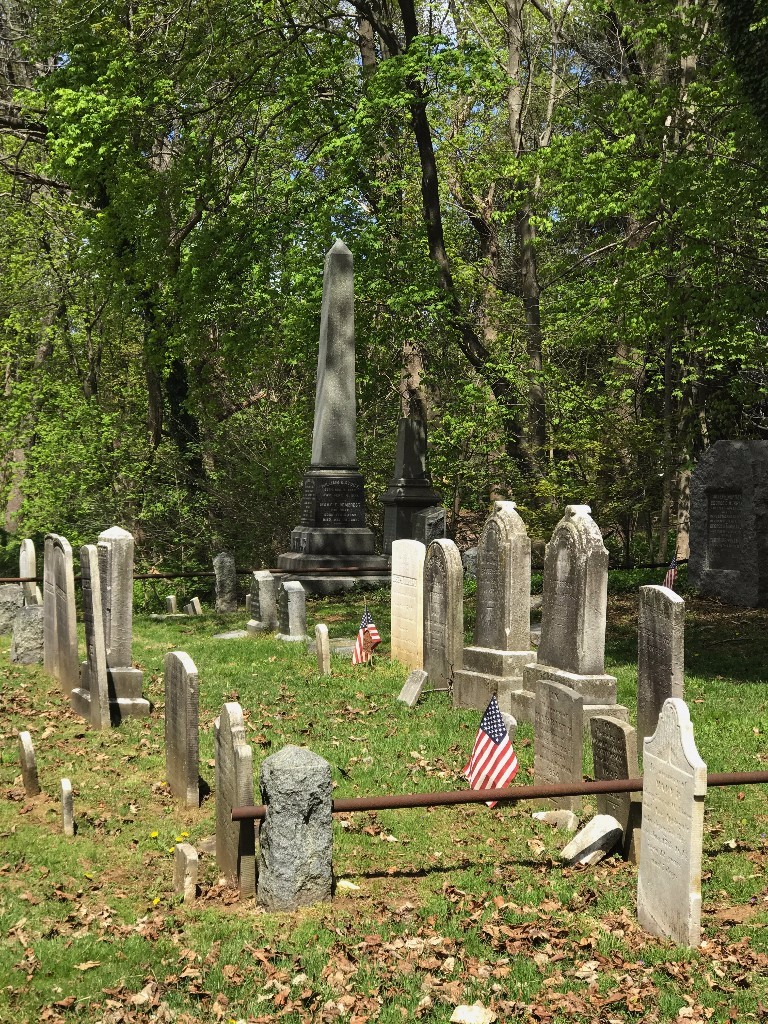
The assault on government led by the right wing talks about government as if it is something apart from us. Well, it is not! Our church graveyard contains the remains of men and women who died because they believed that they should be the government and we are the beneficiaries of their courage and determination. We the people -- those are the words enshrined in the Constitution -- are the government. Listen to the words: “We the people of the United States in Order to form a more perfect Union, establish Justice, insure domestic Tranquility, provide for the common defence, promote the general Welfare, and secure the Blessings of Liberty to ourselves and our Posterity…”

As a Nation, we need to take a different approach on the problem of hunger not just by feeding people through food banks but by radically changing the way we treat the poor. We need to really utilize the old adage of giving a person a fish and there’s food for a day but teach a person to fish and there’s food for a lifetime. It means as a society we need to invest more in benefits that are truly public, like education and job training. The cry of “we can’t afford it” is short-sighted. We cannot not afford it. Just think: doesn’t it make more sense to beef up education, spend the money on teacher salaries than to pay unemployed teachers unemployment, which yields a lower tax rate? Doesn’t it make more sense to have a ,real system of food security rather than doling it out through church food banks? Obviously, I’m not saying we should stop feeding programs but we also need to go to the root causes of food insecurity, as it’s called, and attack the problem there.

This means investing in our society in a way we have not done for many years. It means that each of us must study the issues, consider the questions involved in light of our Christian framework, and do that thing which we really hate to do, contact our state and national legislators with our opinions. Jesus made himself known in breaking bread and sharing it with others. Reflecting Jesus, shouldn’t we do the same?

Let us pray: Magnificent Creator who has given us a world with so much, help us to develop new and creative ways to care for your children so no one will be hungry. Amen.
AT: 05/08/2011 08:30:22 AM   LINK TO THIS ARTICLE
0 Comments:

Post a Comment
Name:

Check here for Anonymous
Email

Website:

 
Please contact me at the phone number and address below
Phone Number

Address:

 
Comment:

 
7 6 9 4 5 9 7 5
Prove you are human, enter the
number you see into the box below.
  View Sermons by Tag:
Acceptance
Advent
Advent Season
Allegiance to God
Anger
Authority
Bearing Witness
Betrayal
Capacity for Evil
Care of the Dead
Caring
Challenging the Status Quo
Change
Charity
Christmas
Citizenship
Civil Discourse
Civil Rights
Commandments
Commonality
Communication
Communitarian Ideal
Community
Compassion
Consumerism
Courage
Cowardice
Creating Heaven on Earth
Cyber bullying
Daily Bread
Death
Decent Working Conditions
Demons
Despair
Destruction
Discipleship
Diversity
Doubt
Easter
Economic Policy
Epiphany
Equality
Excising Demons
Faith
Fear
Food Pantries
Forgiveness
Genealogy
God's Image
God's Love
Grace
Grammar of Gratitude
Gratitude
Greed
Grief
Healing
Holy Spirit
Homelessness
Honesty
Hope
Humility
Hunger
Hungry
Hypocrites
Inclusion
Inclusive Community
Inclusive Society
Innovation
Integrity
Joy
Justice
Karl Barth
Kingdom of Peace
Language
Lent
Living Faithfully
Living Within Limits
Love
Loving God
Loving Thy Neighbor
Loving Without Boundaries
Maps for our Lives
Martin Luther
Martin Luther King
Martyrdom
Meekness
Mercy
Migration
Miracles
Money
Moral Imagination
Music
National Identity
Occupy Wall Street
Origins
Our Environmental Future
Patience
Peace
Personal Limitations
Personal Renewal
Personal Responsibility
Philanthropy
Philip Berrigan
Poor
Possession
Possibility
Posterity
Power
Prayer
Questions of Faith
Real Help
Real Love
Reconciliation
Redemption
Reformation
Religious Reflection
Remembering Life
Repentance
Resource Distribution
Resourcefulness
Revenge
Righteousness
Riotous Readers
Rumors
Sacrifice
Satan
Search for Meaning
Second Chances
Self-Idolatry
Sexual Orientation
Sharing Resources
Shifting Priorities
Societal Responsibility
Spirit of God
Spiritual Blindness
Spiritual Sight
Stigmatization
Taking Risks
Tax Policy
Temptation
the Samaritan
Theological Thinking
Tolerance
Tough Times
Transformation
Trust
Truth
Understanding
Union Strikes
Vengeance
Violence
Volunteering
Wealth
Wealthy
Well-Off
Wisdom
Women
May 2012
What We Risk In Friendship
April 2012
Pruning to Get Blossoms
Fugitive Faith
Life and Breath
Moving Beyond Fear
Opening the Gates
March 2012
Cleaning Out Our Hearts
Questions, Questions!
Uncomfortable Words
Making Sense of It All
February 2012
Reaching Too High
Bodacious Behavior
Faith Healing
Casting Out Demons
January 2012
Raised Up By Others
Where We Don't Want To Go
Moving Beyond Despair
Beyond Epiphany
Seasons of Time
December 2011
Promises and Dreams
The Third Miracle
How Do We Cry Peace?
November 2011
Fantasies Beyond Our Wildest Dreams
Taking Risks
The Beginning of Wisdom
October 2011
Going Against the Grain
Beyond Schmaltz
What We Owe Caesar
Wedding Woes
Destroying Our Inheritance
September 2011
By What Authority: Making Decisions
Wounded Healers
Curable Wounds
August 2011
Thoughts on a Hurricane
Choose with Care
Send Them Away
Being Human
July 2011
Plenty and Want
Honest Trading
Sourdough, Pumpernickel, and More
Finding Good Soil
Paradigm Shifts
June 2011
Punishments and Rewards
Making Disciples
It Happened a Long Time Ago, Right?
Harder Than It Sounds
May 2011
What the Eye Cannot See
The Many Rooms of Faith
Good Shepherds and Bad
Bread Enough to Go Around
There's More to Truth Than Meets the Eye
April 2011
Living as if Easter Mattered
You Can't Have One Without The Other
Unbinding the Dead
Opening Our Eyes
March 2011
Samaritans in Our Midst
Tempting Fables, Tempting Truth
Be Careful What You Pray For
February 2011
Lilies in the Wintertime
Loving Has No Boundaries
Choosing Life
The Right Seasoning
January 2011
Deadly Virtues
Changing Direction
Rise and Go
What Are We Looking For?
Bearing Witness
December 2010
Origins
Preparing for Peace
November 2010
What Are We Hoping For?
Promises, Promises
Living in Tough Times
October 2010
Looking for Truth
Doorkeepers
We Need To Do More Than Walk
Showing Gratitude
Mustard Seeds of Justice
September 2010
What It Takes
Honest Brokers
Mapping the Way
Give Us Our Daily Bread
August 2010
The Shape of the Table
Keeping the Commandments
Standing Within The Fire
Who's on Second?
The Demons That Possess Us
July 2010
Snakes and Stones
Kitchens and Beyond
Help! I Need Somebody - Help!
June 2010
The Demons That Possess Us
The Limits of Power
After
May 2010
The Languages of God
Answering Judas