"He has told you, O mortal, what is good; and what does the Lord require
of you but to do justice, to love kindness, and to walk humbly with your God?"
MICAH 6:8 NRSV
Home
Directions
Contact Us
About Our Church    Sermons    Mission and Outreach    Special Events    Weddings and Sacred Unions    Reflections    Announcements    Prayer For The Week   
You are viewing a single article.
Sunday, April 03, 2011
Opening Our Eyes
by Rev. Joyce Antila Phipps
Texts: Job 9: 1-24; John 9: 1-41

Unlike human beings, many baby animals are born with their eyes closed. Kittens, puppies, and rabbits are examples of animals born with either closed eyes or a thin membrane over the eyes; other animals, such as deer or colts, however, not only are born with their eyes wide open but generally are on their feet within a short time after birth. Some scientists think this has some connection with the gestation period, those animals being born with closed eyes having a shorter gestation period and the ones with eyes open having a longer one. Other scientists think this has to do with the way mothers give birth to their kittens or pups, for example, in hidden nests where they are more sheltered from the world. For example, rabbits, which are, by and large defenseless, live in warrens under the ground that provide protection and shelter from predators.

There are many kinds of blindness, though, that can affect human babies. Babies born at less than 32 weeks gestation often have a thin membrane over their eyes and the eyes begin to open as they develop. In most of those cases, it is simply a matter of waiting until gestational period is more nearly complete. However, some babies are born blind either due to congenital malformations, neurological or physiological impairments, or due to some disease the mother has contracted while pregnant, such as rubella.

There are also many different degrees of blindness ranging from a total lack of light perception to really bad vision correctible by glasses. And there are many diseases of the eye that bring on blindness to persons who had good vision prior to an onset of vision problems. Some are genetically linked, such as glaucoma; others, age linked macular degeneration. Medicine, of course, has developed all sorts of ways to help persons with low vision from the more or less simple cataract surgery to the more complicated corneal transplants. Moreover, thanks to the development of technology, blindness or visual impairment is not the curse it once was.

Visual impairment is only one kind of blindness, however; people can also be spiritually blind as well. Prejudice is a form of spiritual blindness. Most of us in this room consider ourselves as pretty unprejudiced people. But what is a prejudice? The standard dictionary definition says that it is an opinion being formed about a person or group beforehand or without knowledge, thought, or reason for the opinion; more broadly, we could say that prejudices are assumptions about people, beliefs, or things.

Now, none of us is totally prejudice free. We do not function as tabula rasas in the real world; in fact, we think that people who do are pretty naïve. Many of our so-called prejudices have a basis in fact. For instance, although often when I am driving on the highway, I do not think about locking my car door -- perhaps I should, but when I come into a city, I almost always check to see if my car door is locked. Why? Because I do have a prejudice about safe driving in a city and it is based on my perception of facts about carjacking, break-ins, and the like. The perception and the prejudice seem to meld.

But there are deeper prejudices that I know I have, some based on past experience and some based on what probably is a kind of spiritual blindness that prevents me from going beyond the surface impression I have of others. And, I daresay, that many of us share that kind of blindness. For instance, I have a visceral reaction to certain kinds of accents, usually from the deep South. I know why I have those reactions and I tell myself that I should not have those reactions, but I do. It is a kind of spiritual blindness in me that I have to struggle to overcome. Others here may have their own kind of spiritual blindness, as it were, tied into their own life experiences.

But I want to talk about a form of spiritual blindness that many of us may share, namely, the out-of-hand rejection that many of us have of certain belief systems that prevents us from building common ground for building a better society. This past week I attended a lecture by a noted religious philosopher who stated that he believed it was impossible to achieve common ground on the issue of human rights in a pluralistic secular society. I found this disturbing because as an attorney who works in the area of human rights, I feel that I must be able to reach some common ground with people who have differing worldviews than mine.

I know that when I bristle when I hear certain people talk about their Christian faith. They are just so certain that they are right, that they have a corner on the truth. But, I have to ask myself, aren’t I just as spiritually blind when I act as if I have that same corner? And I consider myself to be pretty liberal. I often have to remind myself of Paul’s statement in his letter to the community in Corinth, that now we see through a glass darkly, that we know only in part. Those are pretty hard words for an educated liberal to swallow. But they’re true and an indictment of my own spiritual blindness.

Intellectually, we may agree that, of course, we only know in part, but actually, how we behave towards others is the indictment of our spiritual blindness here. If we are going to have a civil society, then we need to begin acting as if civil society matters. We need to be able to find common ground with those who hold different religious beliefs than our own. We need to learn how to open our eyes to the variety of beliefs, Christian and others, and see how we can develop a civil society that has commonly shared values.

There’s been a breakdown in our common understandings and even common values over the past century in America. Once, at least in the northeast, we were mostly Protestant, although there were differences between various denominations. Then as our nation developed, we added Catholics and Jews and then Muslims, Hindus, Buddhists, and all sorts of outlooks. But we still had a common shared value of tolerance and acceptance of diversity. What’s happening here is that we are losing that common shared value. We have become spiritually blind towards others.

This morning’s Scripture readings take on a new meaning in light of events on Friday. In response to the burning of the Koran by the Florida preacher Terry Jones, there were demonstrations in various parts of the world, one of which ended in tragedy at Mazar Al Sharif. In John, Jesus is asked whether it was because of the sin of the man’s parents or his own sin that he was born blind. In his answer, Jesus points out that it is neither but that God’s glory will be manifest. What does that mean in this context? That through direct action, the man’s blindness is cured; thus, through our own actions, we can work on our own spiritual blindness. And work on it we must. There just is no excuse for this act of desecration. Job protests his own innocence before God, no good and patient Job, to be sure. How can we be "just," to use Job’s phrase, before God? We cannot, to be sure. But we can rely on God’s grace to help cleanse us from our own spiritual blindness. In this room there are many views of Scripture, the nature of God, and beliefs about Jesus, not to mention Islam or other religions. But also in this room we share a meal that cements our common ground of belief, our own civil society, and moves us beyond our spiritual blindness with each other as well as the outside world.

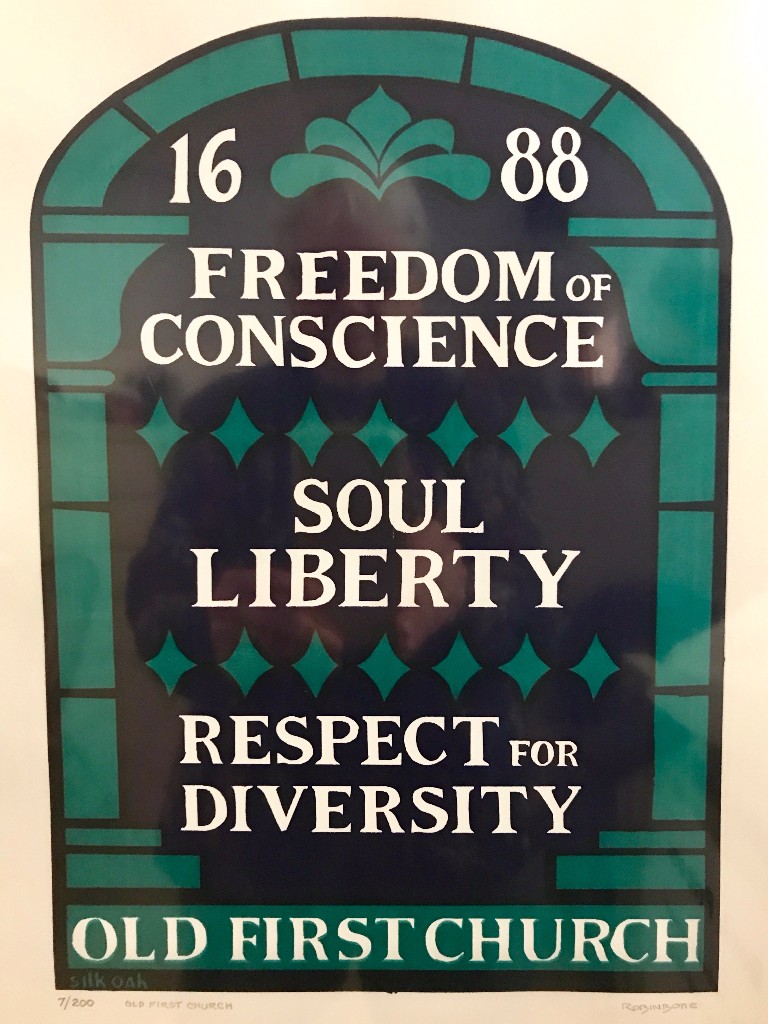
So, as we share the meal, let us remember Paul’s warning that none of us has a corner on the truth and that we need to be open to each other in all the good traditions of soul liberty, freedom of expression, and respecting diversity.

Let us pray: Holy One who is beyond our capacity to understand you, move us from spiritual blindness into acceptance and respect for all the many kinds of belief that your children have. Amen.


AT: 04/03/2011 08:30:31 AM   LINK TO THIS ARTICLE
0 Comments:

Post a Comment
Name:

Check here for Anonymous
Email

Website:

 
Please contact me at the phone number and address below
Phone Number

Address:

 
Comment:

 
3 8 5 1 0 1 9 7
Prove you are human, enter the
number you see into the box below.
  View Sermons by Tag:
Acceptance
Advent
Advent Season
Allegiance to God
Anger
Authority
Bearing Witness
Betrayal
Capacity for Evil
Care of the Dead
Caring
Challenging the Status Quo
Change
Charity
Christmas
Citizenship
Civil Discourse
Civil Rights
Commandments
Commonality
Communication
Communitarian Ideal
Community
Compassion
Consumerism
Courage
Cowardice
Creating Heaven on Earth
Cyber bullying
Daily Bread
Death
Decent Working Conditions
Demons
Despair
Destruction
Discipleship
Diversity
Doubt
Easter
Economic Policy
Epiphany
Equality
Excising Demons
Faith
Fear
Food Pantries
Forgiveness
Genealogy
God's Image
God's Love
Grace
Grammar of Gratitude
Gratitude
Greed
Grief
Healing
Holy Spirit
Homelessness
Honesty
Hope
Humility
Hunger
Hungry
Hypocrites
Inclusion
Inclusive Community
Inclusive Society
Innovation
Integrity
Joy
Justice
Karl Barth
Kingdom of Peace
Language
Lent
Living Faithfully
Living Within Limits
Love
Loving God
Loving Thy Neighbor
Loving Without Boundaries
Maps for our Lives
Martin Luther
Martin Luther King
Martyrdom
Meekness
Mercy
Migration
Miracles
Money
Moral Imagination
Music
National Identity
Occupy Wall Street
Origins
Our Environmental Future
Patience
Peace
Personal Limitations
Personal Renewal
Personal Responsibility
Philanthropy
Philip Berrigan
Poor
Possession
Possibility
Posterity
Power
Prayer
Questions of Faith
Real Help
Real Love
Reconciliation
Redemption
Reformation
Religious Reflection
Remembering Life
Repentance
Resource Distribution
Resourcefulness
Revenge
Righteousness
Riotous Readers
Rumors
Sacrifice
Satan
Search for Meaning
Second Chances
Self-Idolatry
Sexual Orientation
Sharing Resources
Shifting Priorities
Societal Responsibility
Spirit of God
Spiritual Blindness
Spiritual Sight
Stigmatization
Taking Risks
Tax Policy
Temptation
the Samaritan
Theological Thinking
Tolerance
Tough Times
Transformation
Trust
Truth
Understanding
Union Strikes
Vengeance
Violence
Volunteering
Wealth
Wealthy
Well-Off
Wisdom
Women
May 2012
What We Risk In Friendship
April 2012
Pruning to Get Blossoms
Fugitive Faith
Life and Breath
Moving Beyond Fear
Opening the Gates
March 2012
Cleaning Out Our Hearts
Questions, Questions!
Uncomfortable Words
Making Sense of It All
February 2012
Reaching Too High
Bodacious Behavior
Faith Healing
Casting Out Demons
January 2012
Raised Up By Others
Where We Don't Want To Go
Moving Beyond Despair
Beyond Epiphany
Seasons of Time
December 2011
Promises and Dreams
The Third Miracle
How Do We Cry Peace?
November 2011
Fantasies Beyond Our Wildest Dreams
Taking Risks
The Beginning of Wisdom
October 2011
Going Against the Grain
Beyond Schmaltz
What We Owe Caesar
Wedding Woes
Destroying Our Inheritance
September 2011
By What Authority: Making Decisions
Wounded Healers
Curable Wounds
August 2011
Thoughts on a Hurricane
Choose with Care
Send Them Away
Being Human
July 2011
Plenty and Want
Honest Trading
Sourdough, Pumpernickel, and More
Finding Good Soil
Paradigm Shifts
June 2011
Punishments and Rewards
Making Disciples
It Happened a Long Time Ago, Right?
Harder Than It Sounds
May 2011
What the Eye Cannot See
The Many Rooms of Faith
Good Shepherds and Bad
Bread Enough to Go Around
There's More to Truth Than Meets the Eye
April 2011
Living as if Easter Mattered
You Can't Have One Without The Other
Unbinding the Dead
Opening Our Eyes
March 2011
Samaritans in Our Midst
Tempting Fables, Tempting Truth
Be Careful What You Pray For
February 2011
Lilies in the Wintertime
Loving Has No Boundaries
Choosing Life
The Right Seasoning
January 2011
Deadly Virtues
Changing Direction
Rise and Go
What Are We Looking For?
Bearing Witness
December 2010
Origins
Preparing for Peace
November 2010
What Are We Hoping For?
Promises, Promises
Living in Tough Times
October 2010
Looking for Truth
Doorkeepers
We Need To Do More Than Walk
Showing Gratitude
Mustard Seeds of Justice
September 2010
What It Takes
Honest Brokers
Mapping the Way
Give Us Our Daily Bread
August 2010
The Shape of the Table
Keeping the Commandments
Standing Within The Fire
Who's on Second?
The Demons That Possess Us
July 2010
Snakes and Stones
Kitchens and Beyond
Help! I Need Somebody - Help!
June 2010
The Demons That Possess Us
The Limits of Power
After
May 2010
The Languages of God
Answering Judas